Screen time that has an end
Short rounds let a child plan the ending themselves instead of having it forced on them.
The argument about screen time usually gets stuck in one place: how to end it. The drama is rarely about the game itself but about its ending. Titles that never finish — always offering the next level, the next win, the next daily reward — force parents into the role of screen thief. This list was built to take that role away from you.
The principle is simple: short rounds with a clear end. One run finishes in under a minute. One tower either stands or falls. One target either pops or does not. When every unit of play has an ending, the session itself can be given units: five rounds, three towers, two runs. Children can count; that is not a third-grade question, and because they can count, they can plan their own ending.
The most effective method we have heard from families is the two-minute method. The child is told: pick whichever title you want, play as long as you want, but when the two-minute timer sounds, the current round is the last round. Notice what happens: because rounds here are short, two minutes means something real. Compare it with a game where a single level eats twenty minutes — the same timer becomes an insult, and a world collapses.
The second thing that helps is an ending that comes from inside the game. A collapsed tower is an ending promised by the game itself, and children accept it more easily than an ending imposed by parents. Titles in Drop & Stack deliver that natural ending many times every minute, and each ending is followed by an easy fresh start. Practising receiving an ending — and beginning again — is a more valuable skill than anything else a screen teaches.
What if a child cries for one more round after the timer? The honest answer: sometimes that happens, even with this list. But successful notes from families share the same shape — do not be rigid about endings on a hard day. A dark evening, a heavy school day, a house that just moved: on those days, one extra round given calmly buys fewer arguments tomorrow. That flexibility is not defeat; it is how children learn that rules are made by humans who listen.
We also encourage parents to phrase the ending positively. Not five more minutes and I switch it off, but pick two machines for tonight. The difference looks small, yet the first sentence makes you the enemy and the second makes your child the planner. Children who plan their own time stop it themselves more often than we expect.
Finally, avoid counting screen minutes too precisely in front of your child. Announcing numbers every night teaches them that time is the only currency. Better that they learn a good session has a shape — an easy start, a fun middle, an ending that was promised. That shape they will carry everywhere, including to far longer games when they are older.
One final form that succeeds in many homes is the shared ending. When the timer sounds, the child does not merely stop playing but closes the tab with their own hand and announces out loud that the session is over. That small act turns the ending from something done to the child into something done by the child, and the psychological difference is far larger than the time it takes - about five seconds. Families who run this for two weeks usually report that endings stop being an issue altogether.
And a final touch: keep one special title that is only played at weekends. When a game has its own home in the calendar, it stops being a daily request, and working evenings grow calmer. This list is long enough to support one special title without running out of material for ordinary days.
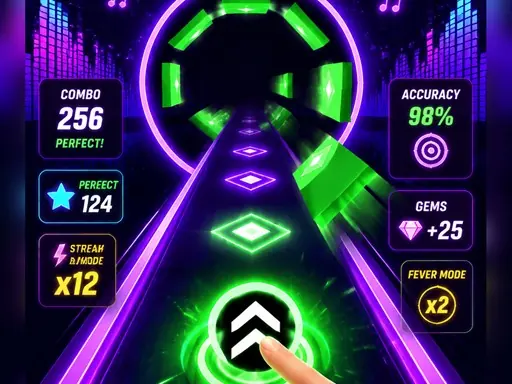 Running Roadball
 Bullet Swarm Runner