Snake Neon: How to Survive Past 100 Apples
Most runs end not because the snake is too fast, but because the player panicked. Five habits that turn a 30-apple run into a 100-apple one.
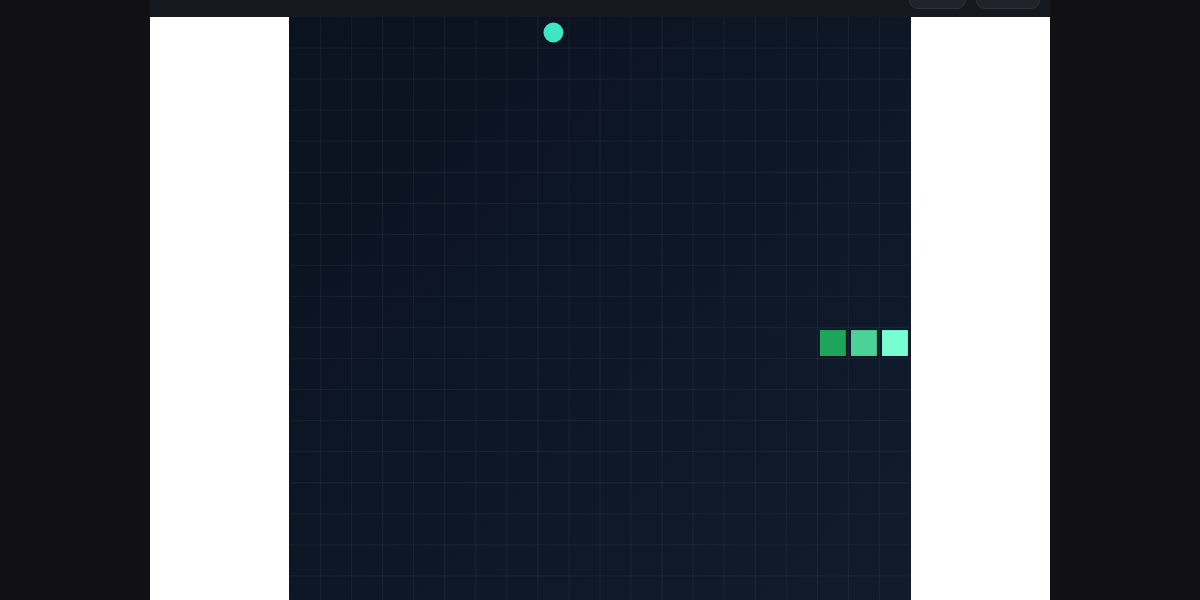
Snake has been remade a thousand times and the failure mode is always the same. Players do not die because the snake is too fast; they die because they made a turn one square too early while trying to be safe.
Hug the wall, do not roam
The instinct in an open board is to sweep the middle. Do the opposite. Running a tight loop around the perimeter keeps your body out of the space you will need for the next apple, and it means your head is never more than one decision away from a known safe route.
Never turn toward your own tail
Almost every death is a head-on collision with the snake’s own body. Before you turn, look one square further in that direction. A tail that is two squares away is safe; a tail that is adjacent is not, even if it will move.
Count your length before you commit
At length fifteen you have room to be adventurous. At length forty you do not. The mental check is simple: if the snake is longer than a quarter of the board’s width, stop taking shortcuts and start taking laps.
Take the apple nearest your current direction
The apple is a target, not an objective. If two apples are available, take the one that requires the smaller change of direction. Crossing the board for a slightly better apple position costs you space, and space is the only resource that matters.
Slow down your inputs, not your speed
Speed is fixed; input rate is not. Panicked players throw four turns in two seconds and break their own loop. If you feel the run slipping, deliberately pause one beat before each turn. The board will not punish patience.
The 100-apple run
A hundred apples is a long, boring, disciplined game. It is a perimeter lap, a two-square gap you never violate, and apples taken in whatever order requires the least direction change. There is no trick — there is just not panicking.